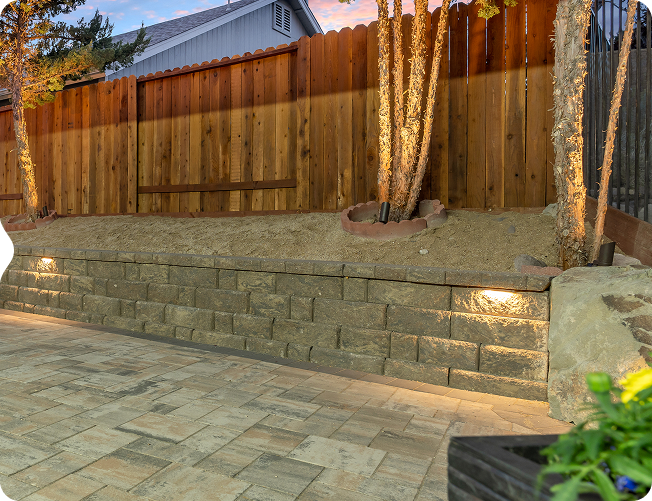
Retaining Wall Installation in Reno & Sparks, NV
Build a stronger, more functional landscape with proper drainage and long-term stability in mind.
- Nearly 50 Years Combined Experience
- Drainage-Focused Construction
- Design Approval Before Construction
- 3-Year Limited Warranty on Pavers & Retaining Walls
Retaining Wall Installation That Plans for Water
A retaining wall has to do more than hold back soil. Proper installation also requires a plan for drainage behind the wall.
-
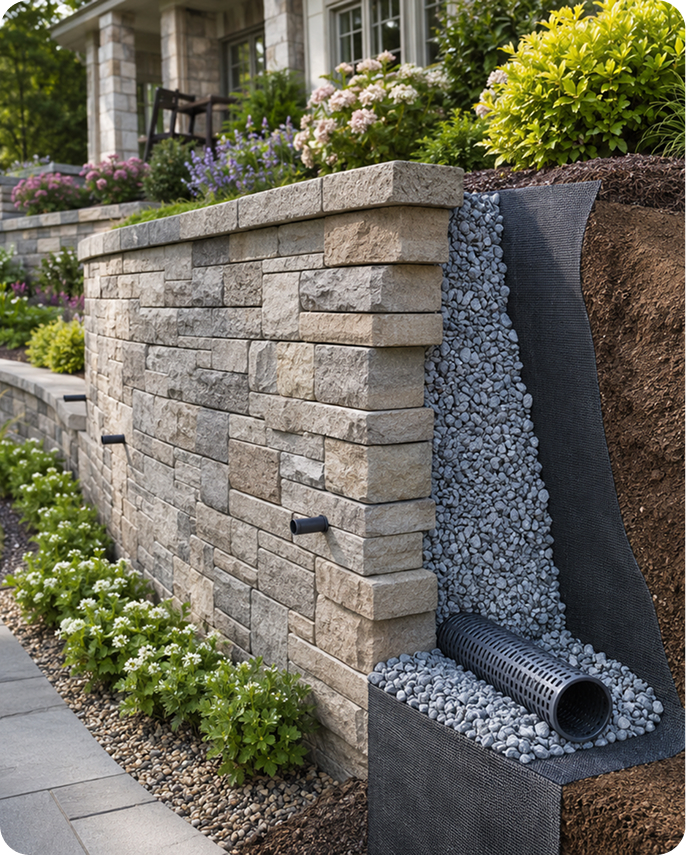
Clean Drainage Material
Gravel or clean stone behind the blocks creates space for water to move instead of collecting in saturated soil.
-
Drainage at the Base
A drain pipe near the base of the wall can help move water away from the structure.
-
Separation From Soil
Landscape fabric or geotextile fabric can help keep soil behind the wall from mixing into the drainage material.
Create a More Functional Landscape
Retaining walls can manage a slope, reduce erosion and create more usable outdoor space while giving the landscape greater structure.
Retaining Wall Installation for Slopes, Yards & Grade Changes
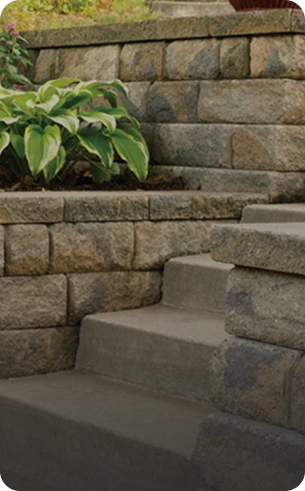
Manage Slopes
Create cleaner transitions between different elevations.
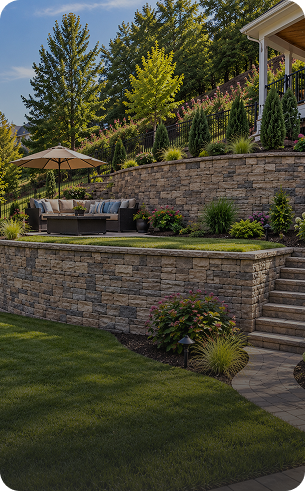
Create Usable Space
Turn difficult sloped areas into more functional sections of your yard.
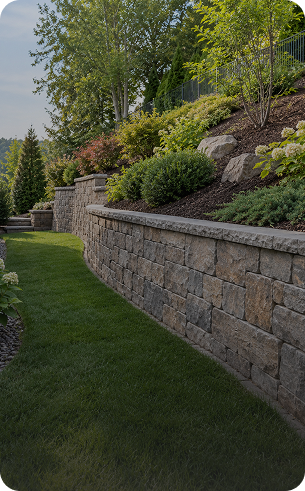
Control Soil Movement
A well-built retaining wall can help manage erosion and hold soil in place.
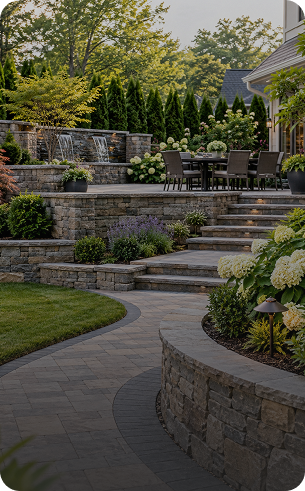
Add Landscape Structure
Use retaining wall systems to complement patios, walkways, planting areas and other outdoor improvements.
What to Look for in a Retaining Wall Installer
Building retaining walls requires more than stacking wall blocks.
-
Proper Base Preparation
The first row of wall units needs a stable, level foundation. The trench, base material and first course all affect the wall above them.
-
Drainage Behind the Wall
Your installer should explain how gravel, backfill and drainage will manage water behind the blocks.
-
Retaining Wall Design
Wall height, length of the wall, slope, soil conditions and surrounding landscape should influence the retaining wall design.
-
Reinforcement When Needed
Some retaining wall systems may require geogrid or other reinforcement depending on wall height, site conditions and engineering requirements.
See What a Retaining Wall Can Change
A retaining wall can reshape a slope, create a terrace, define outdoor spaces and give your landscape a more finished appearance.

Before
After
From Property Evaluation to Retaining Wall Construction
You don't need to know how to build a retaining wall before contacting us. We'll evaluate the site and develop the right approach for your property.
Mark & Evaluate the Area
We'll look at the project area, slope, wall height, drainage, soil conditions and surrounding landscape.
Plan the Wall
We'll determine the retaining wall layout, materials and site preparation needed before construction begins.
Review & Approve
You'll review the scope, pricing and retaining wall design before work begins.
Prepare & Build
We'll complete the excavation, base preparation, drainage and retaining wall construction required for the project.
Limited 3-Year Retaining Wall Warranty
Our retaining wall installation services include a limited three-year warranty, subject to the written warranty terms provided with your project.
Retaining Wall FAQs
How much does retaining wall installation cost?
The cost of a retaining wall project depends on wall height, length of the wall, material, excavation, drainage, base preparation, reinforcement, site access and overall complexity.
We'll evaluate your property before developing pricing around the actual retaining wall construction required.
How do you build a retaining wall?
A professional retaining wall installation generally begins by marking the area and excavating a trench for the base.
The installer then prepares and compacts the foundation, lays the first course level from front to back, installs drainage as required and continues stacking the next course of block according to the retaining wall system.
Backfill, gravel and reinforcement may also be added as construction progresses.
Why is laying the first course so important?
The first course creates the foundation for every row of blocks above it.
The wall units need to sit level and securely on the prepared base. Small errors in the first row can become much more noticeable as additional courses are installed.
How deep should you dig the trench for a retaining wall?
The depth of the trench depends on the retaining wall system, wall height, block dimensions, soil and site conditions.
Rather than following a universal “inches deep” rule from a step-by-step guide, the excavation should be based on the requirements of the specific wall being built.
What goes underneath retaining wall blocks?
Block retaining walls generally require a compacted base beneath the first course of block.
The exact base material, depth and compaction depend on the retaining wall design and site conditions.
What goes behind retaining wall blocks?
The area directly behind the block commonly contains clean gravel or another drainage material.
A drain pipe may be installed near the base, while landscape fabric can help separate the drainage zone from the soil behind the wall.
Why is gravel used behind a retaining wall?
Gravel creates void space that allows water to move more freely behind the wall.
Without proper drainage, saturated soil behind the wall can create additional pressure against the retaining wall.
What is backfill?
Backfill is the material placed behind the wall as retaining wall construction progresses.
The correct backfill depends on the wall design. Drainage stone is often used directly behind the blocks, while other soil may be placed farther behind the wall.
What is geogrid in a retaining wall?
Geogrid is a reinforcement material used in some retaining wall systems.
It extends back into the soil behind the wall to help reinforce the structure. Whether geogrid is required depends on factors such as wall height, slope, soil conditions and engineered design.
Do retaining wall blocks interlock?
Many segmental retaining wall blocks are designed to interlock or mechanically connect from one course to the next.
Different retaining wall systems use different block shapes and connection methods.
Do retaining wall blocks need adhesive?
Some retaining wall systems use concrete adhesive for caps or specific wall units, while others rely primarily on the interlocking design of the blocks.
The manufacturer's installation requirements should guide the proper method.
How are retaining wall blocks kept level?
During installation, each course is checked for level and alignment.
The first course requires particular attention because it establishes the position of the rest of the wall.
What tools are used when building retaining walls?
Retaining wall contractors may use excavation equipment, levels, compactors, hand tampers, rubber mallets and other construction tools depending on the project.
The equipment needed changes with wall size, access and the retaining wall system being installed.
Why is compaction important?
Compaction helps create a stable foundation and properly placed backfill.
Poor compaction can allow material to settle or move after retaining wall construction is complete.
Does a retaining wall need a drain pipe?
Many retaining wall designs include a drain pipe to help carry water away from behind the wall.
The need, size and placement of drainage depend on site conditions and the wall design.
Why is proper drainage so important?
Water pressure is one of the major forces acting on a retaining wall.
Proper drainage helps keep water from collecting behind the wall and adding unnecessary pressure to the structure.
Can a retaining wall help with erosion?
Yes.
A retaining wall can help control soil movement and erosion on sloped properties when the wall, drainage and surrounding grading are properly designed.
What causes a failing retaining wall?
A failing retaining wall may be affected by poor drainage, inadequate base preparation, soil movement, improper backfill or insufficient reinforcement.
Visible leaning, bulging, separating wall blocks or shifting can indicate a problem.
Can an existing retaining wall be rebuilt?
Often, yes.
The right approach depends on why the original wall failed. A replacement retaining wall project should address underlying issues such as drainage, base preparation or soil conditions rather than simply rebuilding the same wall.
Visible leaning, bulging, separating wall blocks or shifting can indicate a problem.
How tall can a retaining wall be?
Wall height affects the engineering and construction requirements.
Walls higher than 4 feet often require additional design consideration, but engineering and permit requirements vary by jurisdiction, site conditions and how wall height is measured.
Always check local building codes and project requirements before construction.
Does a retaining wall need an engineer?
Some retaining walls require engineering because of height, slope, loads, soil conditions or their location on the property.
A qualified contractor should identify when a retaining wall project needs additional design or engineering input.
Do I need a permit to build a retaining wall?
Permit requirements depend on your jurisdiction and the specifics of the project.
Wall height, slope, location and structural conditions may all affect permitting, so current local building codes should be checked before construction begins.
What types of retaining wall blocks are available?
Retaining wall blocks come in different sizes, colors, textures and interlocking systems.
Segmental concrete wall blocks are common, while natural stone and other retaining wall systems can also be used depending on the landscape and design goals.
What is an Allan Block retaining wall?
Allan Block is one manufacturer of segmental retaining wall systems.
Its products are an example of the interlocking block systems available for retaining wall construction. The best wall system depends on the specific project and design requirements.
Can a retaining wall create a terrace?
Yes.
Multiple retaining walls can sometimes be used to terrace a slope and create separate landscape levels.
The spacing, wall height, drainage and soil conditions need to be considered when designing terraced retaining walls.
How long does retaining wall installation take?
The schedule depends on the wall height, length, excavation, site access, drainage, reinforcement and amount of backfill required.
A basic retaining wall and a larger engineered wall can require very different construction timelines.
How long should a well-built retaining wall last?
Longevity depends on the retaining wall system, materials, base preparation, drainage, soil conditions and quality of installation.
Proper drainage and a stable foundation can make a significant difference in long-term performance.
Planning a Retaining Wall?
Tell us what you want to change about your landscape. We'll evaluate the slope, drainage and project area and help you plan the right retaining wall for your property.